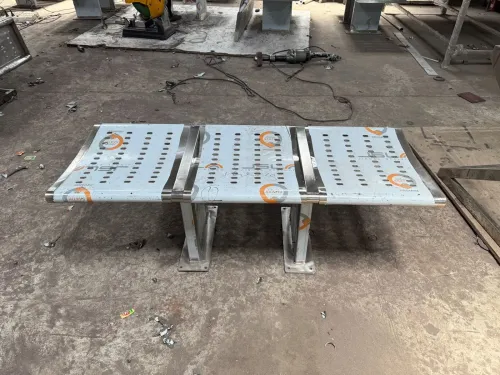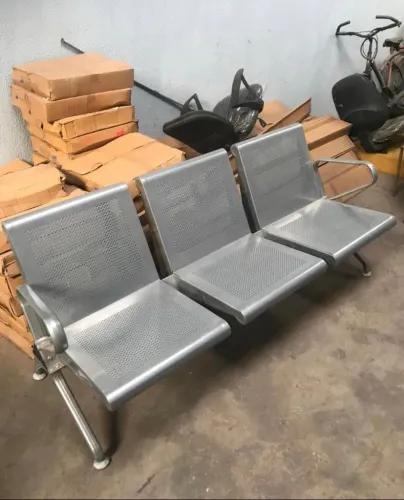
A damaged station chair is not automatically a replacement job: the shell, frame, welds, anchors and concrete connection can fail independently. By separating those components, checking corrosion and movement, and measuring the existing installation, you can choose a safe repair, a modular part swap or a complete replacement without creating new clearance and fixing problems.
Key takeaways
- Repair chairs when frames, welds and floor anchors remain sound.
- Swap isolated damaged seats, backs, fasteners or armrests before replacing whole chairs.
- Replace chairs when structural damage or unsafe anchorage cannot be repaired economically.
- Specify dimensions, clearances, fixings, spares and installation controls in the supplier brief.
Decide whether the chair needs repair, a part swap or full replacement
Choose repair when the chair’s frame, welds and floor connection remain sound; choose a part swap for isolated damage; choose full replacement when the structure or anchorage cannot be made safe economically.
| Option | What it means | When it applies |
|---|---|---|
| Repair | Correct the existing component and finish | Replace bolts, feet or missing fasteners; repair a sound weld; grind sharp edges; clean surface staining; passivate stainless steel or repaint carbon steel |
| Part swap | Remove and replace one modular component | Use damaged metro seating replacement for a punctured, deeply dented or vandalised seat pan or backrest, failed inserts, torn edges, bent perforated panels or damaged armrests |
| Full replacement | Remove the chair and install a complete tested unit | Replace chairs with bent legs or frames, cracked load-bearing welds, section loss from corrosion, distorted base plates, loose or elongated anchor holes, unstable floor fixings or repeated failed repairs |
Separate the seat shell, back, support frame, armrest, floor plate, anchor bolts and grout during inspection. Surface staining is cleanable; corrosion that has reduced tube or sheet thickness is not. A loose or distorted floor connection makes a cosmetic shell replacement unsafe.
For metro chair repair or replacement in Greater Noida, approve work only after checking sharp edges, cracked welds, missing fasteners, unstable legs and anchor condition. Require load and stability verification of the complete installed chair, not just the replacement panel, against the operator’s stated EN 16139 edition and test category.
A first-article mock-up prevents an approved factory chair from failing at the actual station anchors.
Inspect the station chair, fixings and surrounding platform before approving work
Before approving metro chair repair or replacement in Greater Noida, inspect the complete installed assembly, not only the visible seat panel. A sound shell on a loose base remains unsafe.
1. Record each chair by station, platform, bay and asset number. Measure seat height, seat pitch, aisle clearance, base-plate dimensions and anchor-hole spacing. Photograph cracked shells, bent perforated panels, sharp edges, corrosion, missing fasteners and damaged welds.
2. Separate the seat shell, back, support frame, armrests, floor plate, anchor bolts and grout during inspection. Check tube joints for corrosion, legs for distortion, welds for cracking, and anchors for looseness, pull-out, damaged threads or inadequate edge distance.
3. Inspect the surrounding platform for slab cracks, uneven flooring, water ponding, failed grout, tactile-paving conflicts and cleaning access. Check that proposed drilling will not strike embedded services or create a trip hazard. A replacement that fits the chair can still fail at the floor connection.
4. Test the complete installed chair for load response, rocking, sharp projections and fastener movement after tightening. Do not approve a panel-only check; stability depends on the frame, base plate, anchors and platform together.
Use a site measurement sheet, defect photographs, material and finish samples, and a first-article or mock-up approval before production. Record the approved anchor arrangement and final fasteners in the as-built file. That evidence makes the repair method traceable.
Choose the repair scope and material for the station environment
Choose the smallest scope that restores strength, geometry and cleanability. Surface staining can be cleaned; measurable section loss, cracked frames or damaged anchor points require part or chair replacement.
| Option | Repair method | Material and finish | Use |
|---|---|---|---|
| Seat or back panel | Replace panel; deburr all edges | 304 stainless steel, brushed and passivated | Bent, sharp or perforated panels |
| Frame or weld | TIG-weld compatible stainless, blend welds | 304; use 316 or 316L in exposed, wet or heavily washed areas; pickle and passivate | Local cracks without section loss |
| Carbon-steel frame | Cut out weakened metal and weld a new section | Zinc-rich primer, epoxy intermediate coat and polyurethane topcoat | Only where a maintained painted system is acceptable |
| Anchor or base | Replace anchor and distorted base plate; verify pull-out or torque | Match fastener grade to the environment; isolate dissimilar metals and use anti-seize on stainless threads | Movement, cracking, water ingress or impact |
Do not use carbon-steel grinding wheels, wire brushes or contaminated shop dust on stainless. Require stainless-only tooling, segregated fabrication and final cleaning; embedded iron can create rust-like staining after installation.
For durable steel station chair repair options, require these acceptance checks:
- Confirm welds are smooth, edges rounded and drainage holes open.
- Check the complete installed chair for load, stability, anchor condition and substrate damage, not just the replacement panel.
- Record fastener type, torque or pull-out result, coating system and final photographs.
Approve a first article or mock-up before production. It exposes finish, fit and cleaning-access errors while correction is still inexpensive.
Specify a replacement that fits the existing station without creating hazards
Successful steel metro chair replacement in Greater Noida starts with a measurement sheet taken from the actual platform, not from an old drawing. Record:
- Overall chair width, depth and height, including armrests and projecting fasteners.
- Seat height, backrest angle, seat pitch and the clear aisle distance to walls, columns, gates and adjacent seats.
- Existing base-plate dimensions, anchor-hole centres, bolt diameter, thread condition, embedment depth and edge distances.
- Platform level, slope, grout condition and the distance from each fixing to platform edges, drainage channels and tactile paving.
- Cleaning access beneath and behind the chair, including space for a mop, pressure-washing nozzle and inspection of concealed fixings.
Reproduce the existing anchor pattern and clearances unless the station operator approves a layout change. A chair that fits its base plate but misses embedded anchors can trigger unauthorised drilling, weak concrete edge distances or a protruding trip hazard.
Specify rounded, continuously finished edges; tamper-resistant fasteners; captive washers; sealed tube ends; and a floor connection that cannot rock after tightening. A modular seat pan or backrest makes damaged metro seating replacement faster without discarding a sound frame.
Require a first-article mock-up, installation and barricading method, material and finish samples, complete-chair load and stability verification, and an as-built fastener record. Cite the operator-approved edition and test category of EN 16139 rather than treating office-furniture results as sufficient.
Build a supplier brief that controls installation, spares and future maintenance
Appoint the metro chair maintenance supplier that can prove control from measurement to handover, not the bidder offering the lowest replacement price. Treat Kunwar Bros & Co, or any bidder, against the same evidence and require a site-specific scope for every Greater Noida station.
| Supplier evidence | Reject or question | Acceptable evidence |
|---|---|---|
| Site survey | Catalogue dimensions only | Measurement sheet, anchor-hole sketch and defect photographs |
| Installation control | Verbal access promise | Method statement, possession or barricading plan and cleaning sequence |
| Quality approval | Finished samples only | Material and finish samples plus approved first article or mock-up |
| Structural assurance | Panel inspection alone | Load and stability verification of the complete installed chair |
| Handover | Invoice and delivery note | As-built fastener record, locations, quantities and tightening details |
Your brief should require these deliverables before production:
- Confirm seat height, seat pitch, aisle clearance, cleaning access and the existing anchor-hole pattern; prohibit unapproved drilling.
- Separate prices and lead times for steel station chair repair options, panel swaps and complete replacements.
- Specify stainless-only wheels, brushes and fabrication areas; require final cleaning to remove iron contamination.
- Name the applicable EN 16139 edition and test category, or state the operator’s own acceptance test.
- List spare shells, backrests, frame members, armrests, base plates, anchor bolts, anti-tamper fasteners and touch-up materials.
- Set response times, inspection intervals, warranty exclusions and a stocked-spares obligation.
Approve payment only after the mock-up passes fit, finish, load and stability checks, and the as-built record matches the installed chairs.
Related product
 | Furniture ₹6500 Steel metro chair and steel multi seater chair, steel Airport visitor chair etc. View product → |
Frequently asked questions
How do you decide between metro chair repair, a part swap and full replacement?
Repair the chair when its frame, welds and floor connection remain sound. Swap an isolated damaged seat, back, armrest or fixing. Choose full replacement when structural damage or unsafe anchorage cannot be repaired economically.
What should you inspect before approving station chair work?
Inspect the frame, welds, seat and back, exposed edges, fasteners, floor anchors, corrosion, movement and the surrounding platform. Check whether loose fixings or platform damage is the real cause of instability.
Which materials suit metro station seating?
Choose materials that tolerate frequent cleaning, moisture, impact and outdoor exposure. Compare stainless steel grade, surface finish, weld quality, rounded edges, replacement-part availability and compatibility with existing fixings.
What should a supplier brief include for damaged metro seating replacement?
Include chair dimensions, mounting-hole positions, clearances, load requirements, finish, anti-tamper fixings, installation timing, protection of passengers, inspection records, spare parts and future maintenance responsibilities.
Keywords